Utah Games at City Centre
Programming and Design
CLIENT: UNIVERSITY OF UTAH
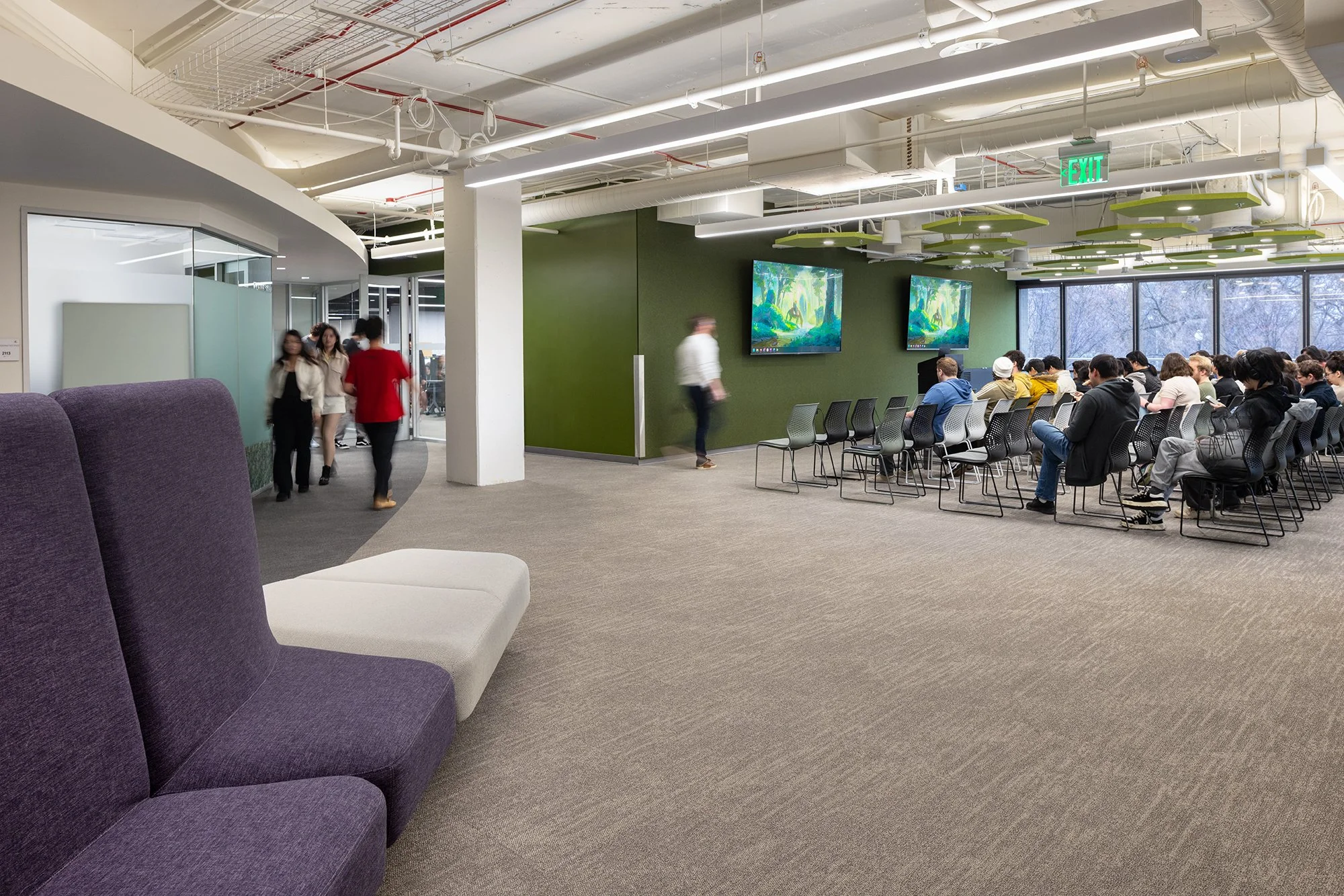
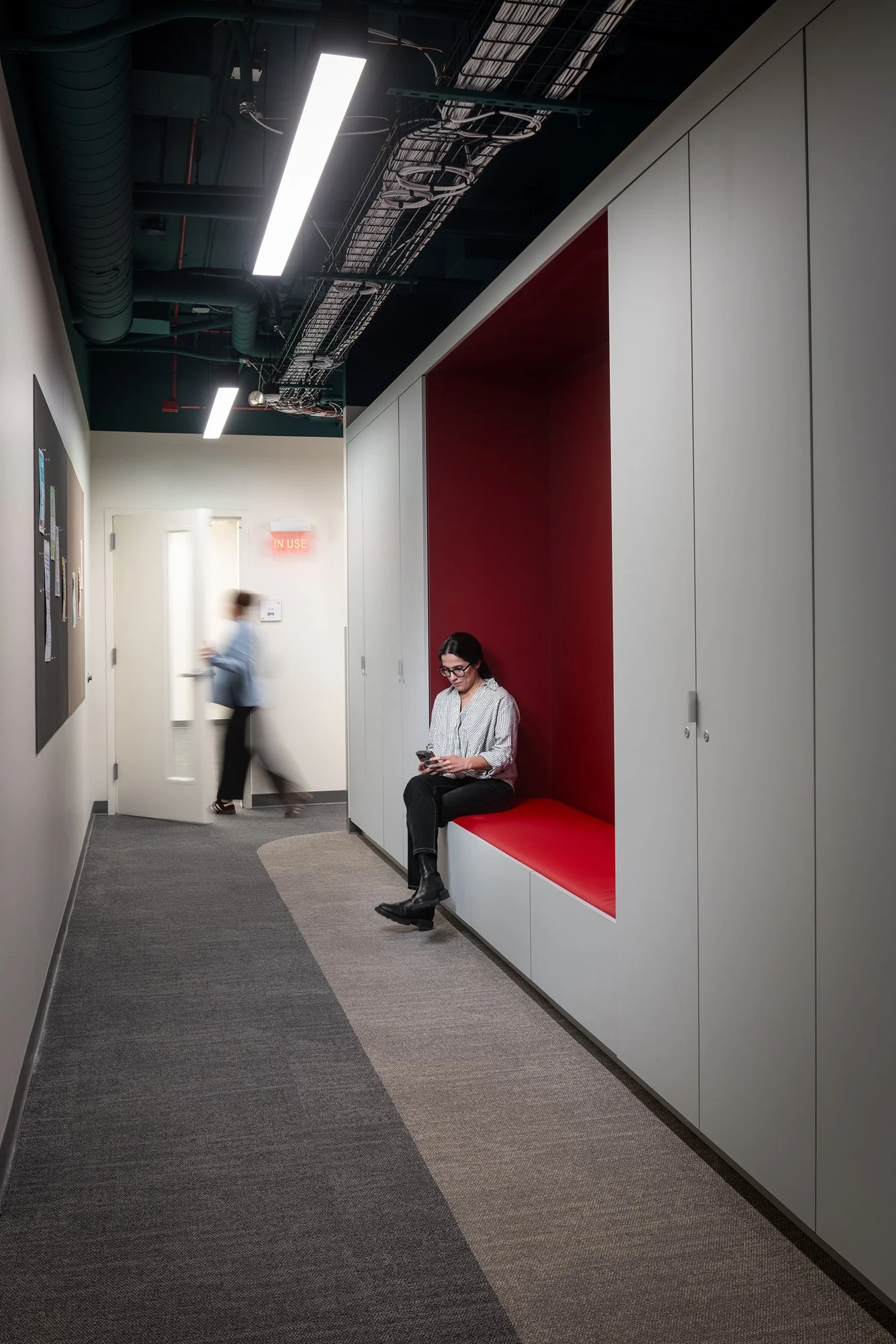
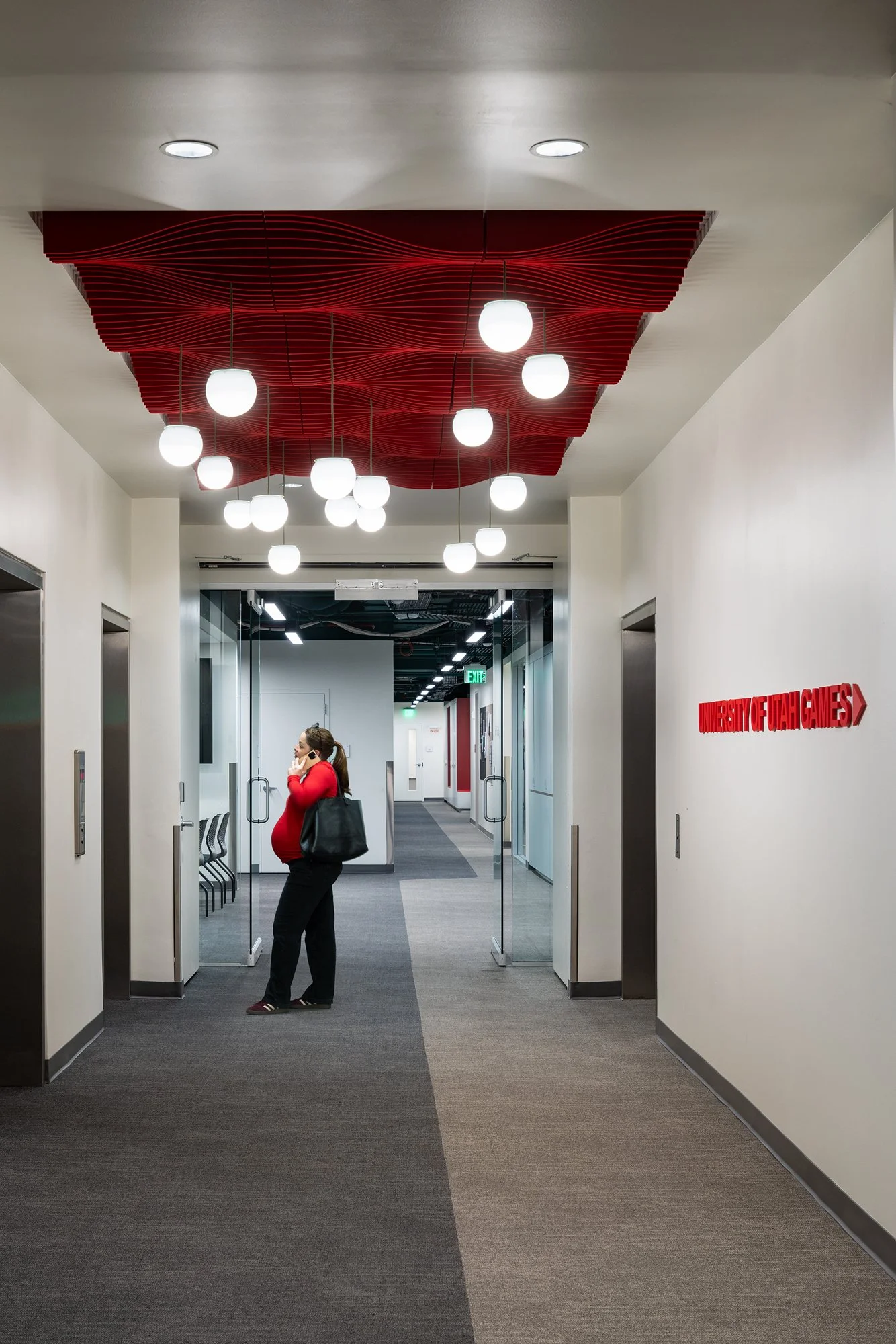
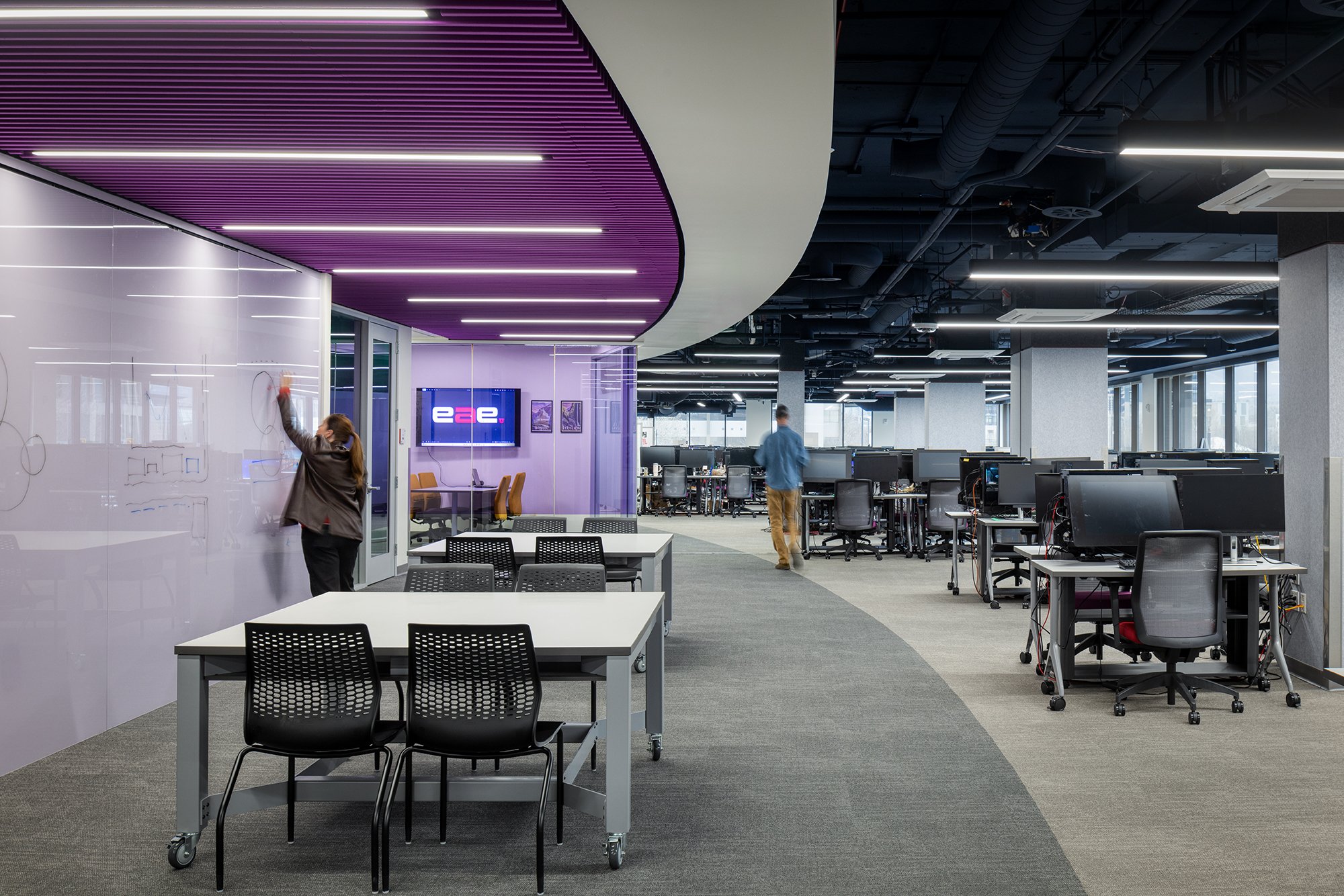
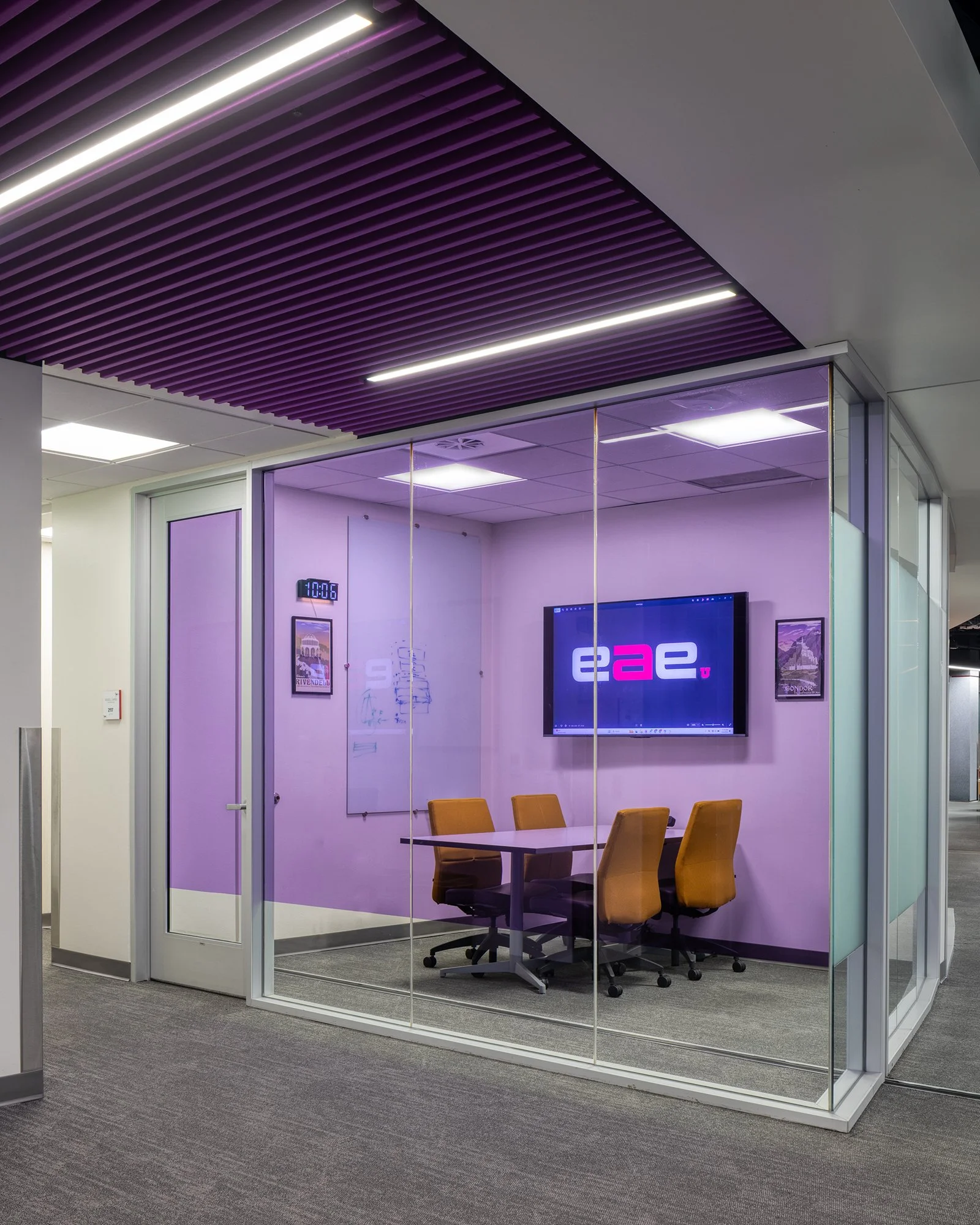
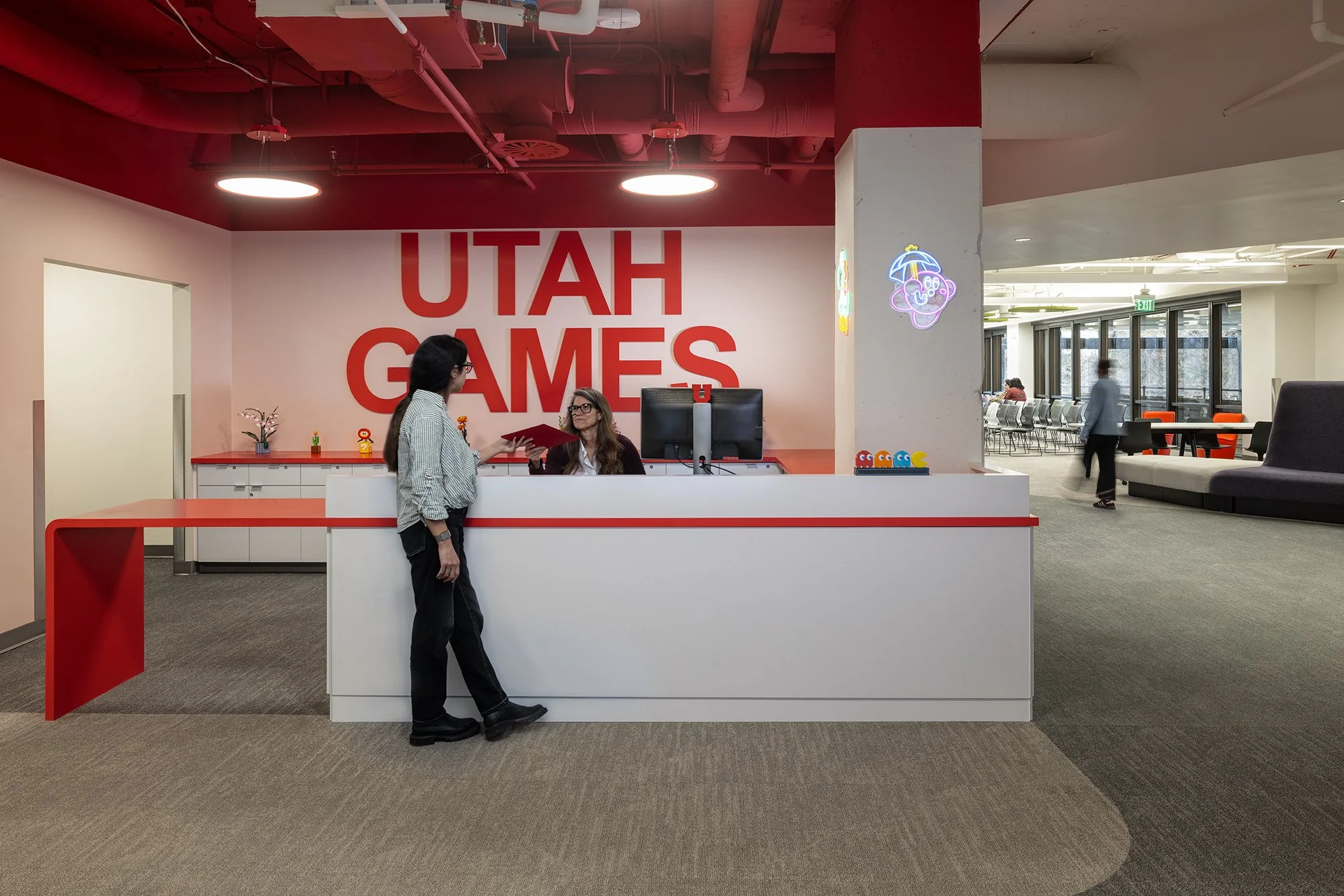
The Utah Games at City Center is a transformative 22,500-square-foot development downtown SLC, designed to serve as the University of Utah’s premier game and research hub. This is a high-energy, branded environment characterized by open ceilings, exposed columns, and a “Dune Red” color palette that anchors the space in the University’s visual identity. We studied concepts of different worlds that the students could inhabit- the forest near the main entry where knowledge and presentations occur; the reception desk a land of bubble gum and red lipstick; a lavender field where collaborative conversations occur, the main studio space sits under a deep blue night and for the faculty we find a teal river ceiling where information flows from one end of the space to the other.
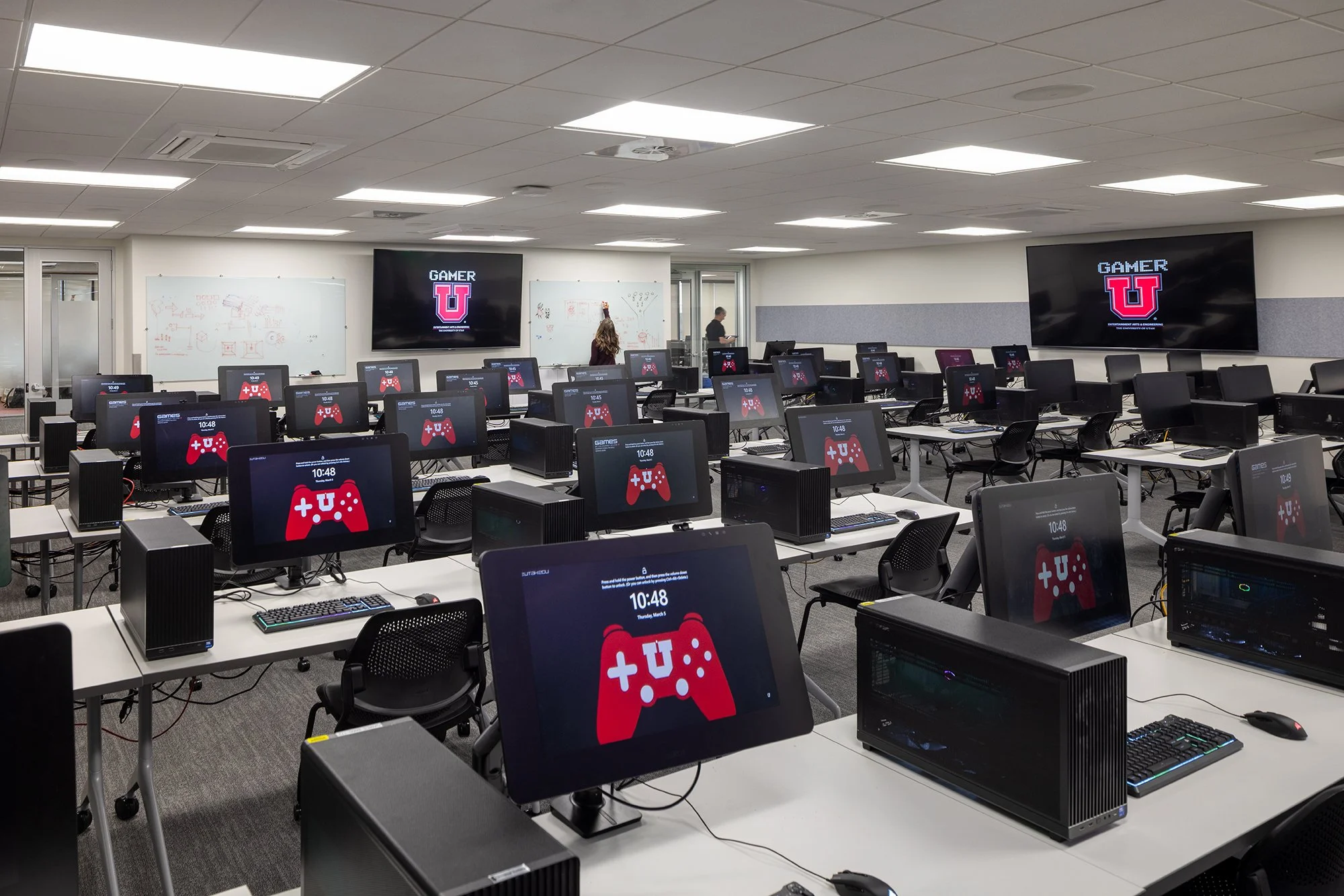
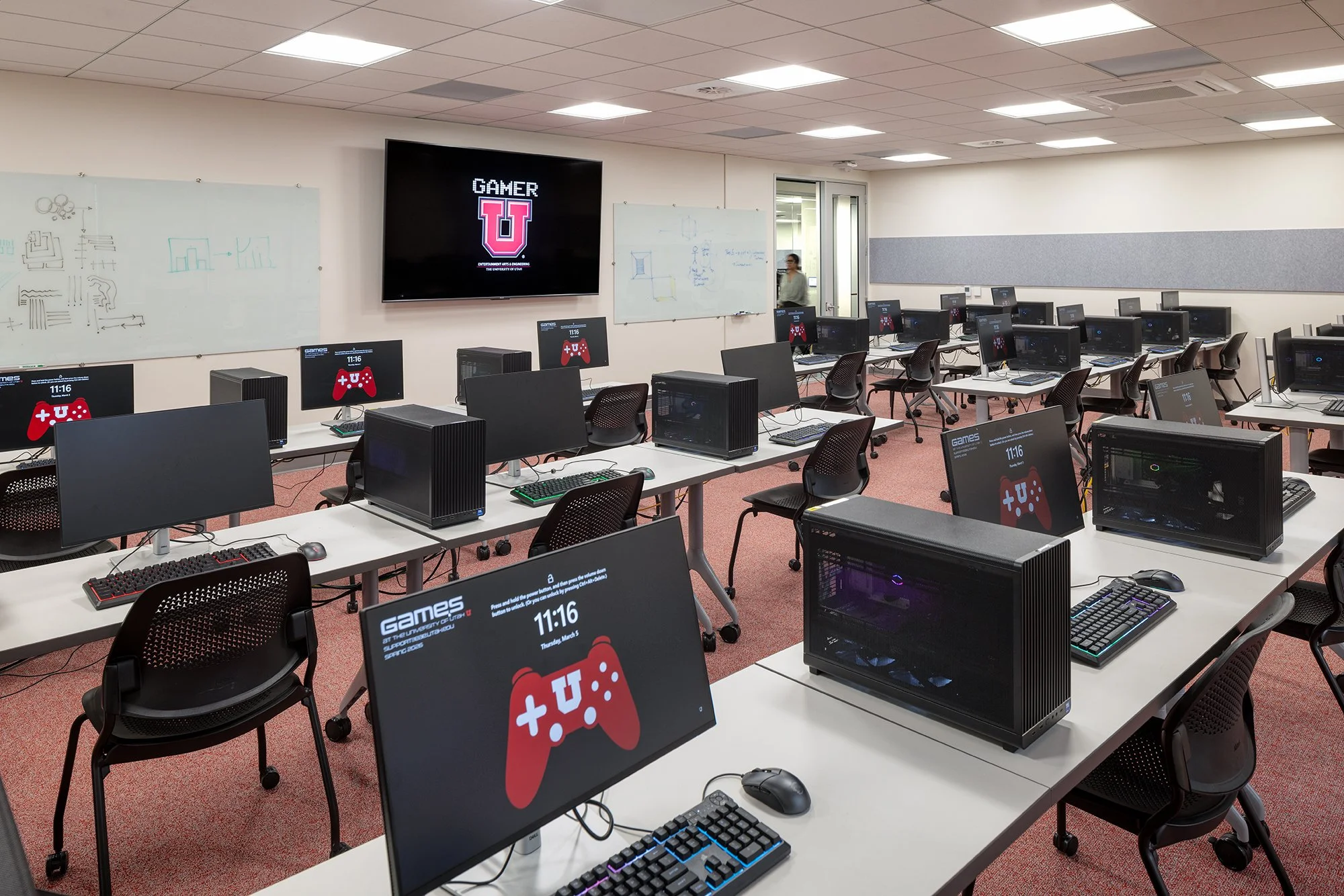
The facility is strategically programmed to merge high-density instructional areas with cutting-edge research laboratories. A cornerstone of the educational wing is the 40-seat Cintiq classroom, which features 50-inch custom workstations designed to accommodate large41-scale digital drawing equipment. This is complemented by a 24-seat graduate instruction room, several smaller class labs, and a versatile Flex Space, equipped with a mobile lectern and dual-screen presentation stations that offer independent or synchronized control to support diverse teaching styles.
Technical research and production are supported by specialized environments, including a Motion Capture and production studio designed for virtual production with integrated LED walls. The facility also houses four dedicated research labs for Augmented and Mixed Reality, a Fabrication Lab for physical prototyping, and a Scan Lab for full-body 3D photogrammetry. A Graduate Studio with capacity for 200 desks and an Undergraduate Social Engagement lounge, providing a vital touchdown point for students operating between the main campus and this downtown satellite.
To sustain the intense hardware requirements of the program, the infrastructure is engineered for high-performance loads, providing 1,500 Watts per computer through a flexible network of faux columns and perimeter raceways. Significant thermal output is managed by supplementary HVAC units installed on the Level 3 roof. Security is integrated throughout, utilizing a C-Cure access control system and extensive camera coverage to protect specialized equipment. Following the completion of Phase 1 in late 2025 and the finalization of Phase 2 designs in early 2026, the project remains on schedule for a Fall 2026 occupancy, with future growth already planned for the third floor.
Photography: Paul Richer